Guanghua School of Management, November 6, 2025 — The line between flesh and circuit board became blurrier than ever last Thursday evening as the Guanghua School of Management hosted a special screening of the sci-fi thriller Upgrade, followed by a a panel discussion. The event, part of the movie screening event series for the Peking University International Culture Festival, successfully merged cinematic thrills with interlectual discussion.
The evening kicked off with the movie screening which sparked a lively debate on autonomy, control, and identity in an increasingly digitized world during the discussion between panelists and ethusiastic audience.
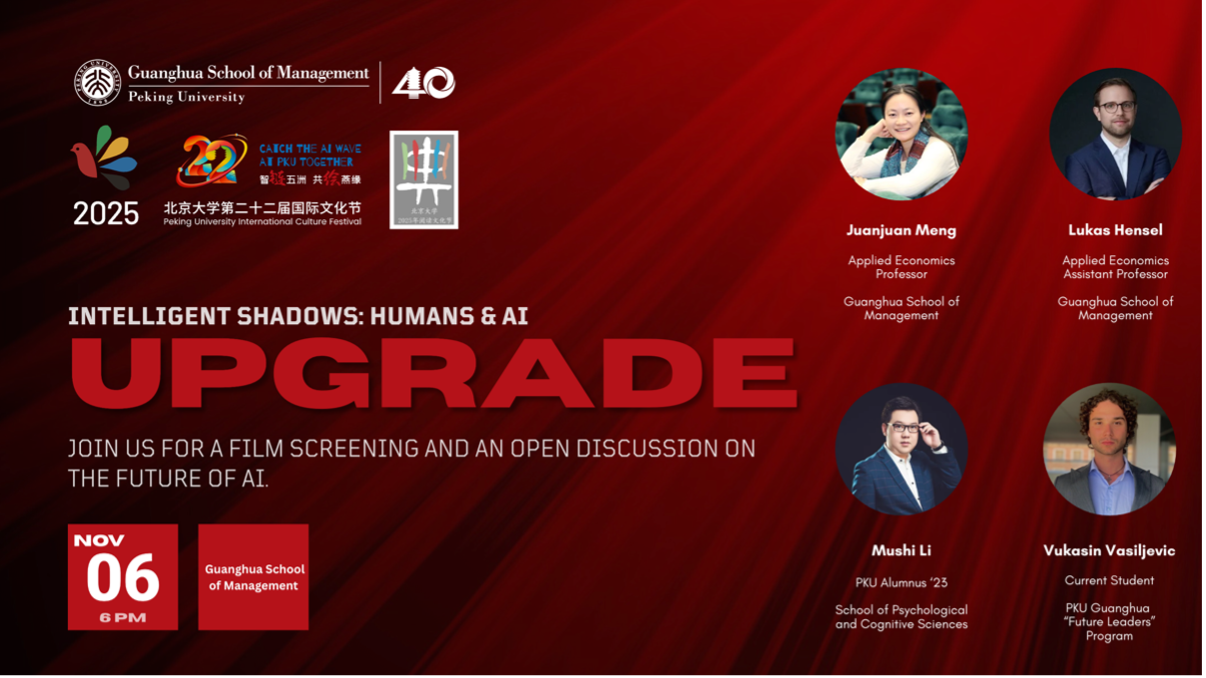
The Panel: Beyond the Screen, Into the Mind
The roundtable panel, featuring Professor Juanjuan Meng and Professor Lukas Hensel from Guanghua School of Management, Dr. Mushi Li, a PKU alumnus from the School of Psychological and Cognitive Sciences, and Vukašin, a third year student from the PKU Guanghua “Future Leaders” Program, quickly focused on the psychological and philosophical implications of deep AI integration. The panel was moderated by Jovana Petrovic who are also from the Future Leaders Program.
Dr. Mushi Li introduced the concept of the "gray" character, noting the protagonist’s name, Grey, symbolizes the confusion that arises when combining human feeling with an AI, leading him to transform from a “mild guy to a wild guy.” Dr. Li emphasized that AI’s fundamental difference from humans is the lack of emotion, particularly fear, stating, “Without emotion, I cannot feel the same way as a human.”
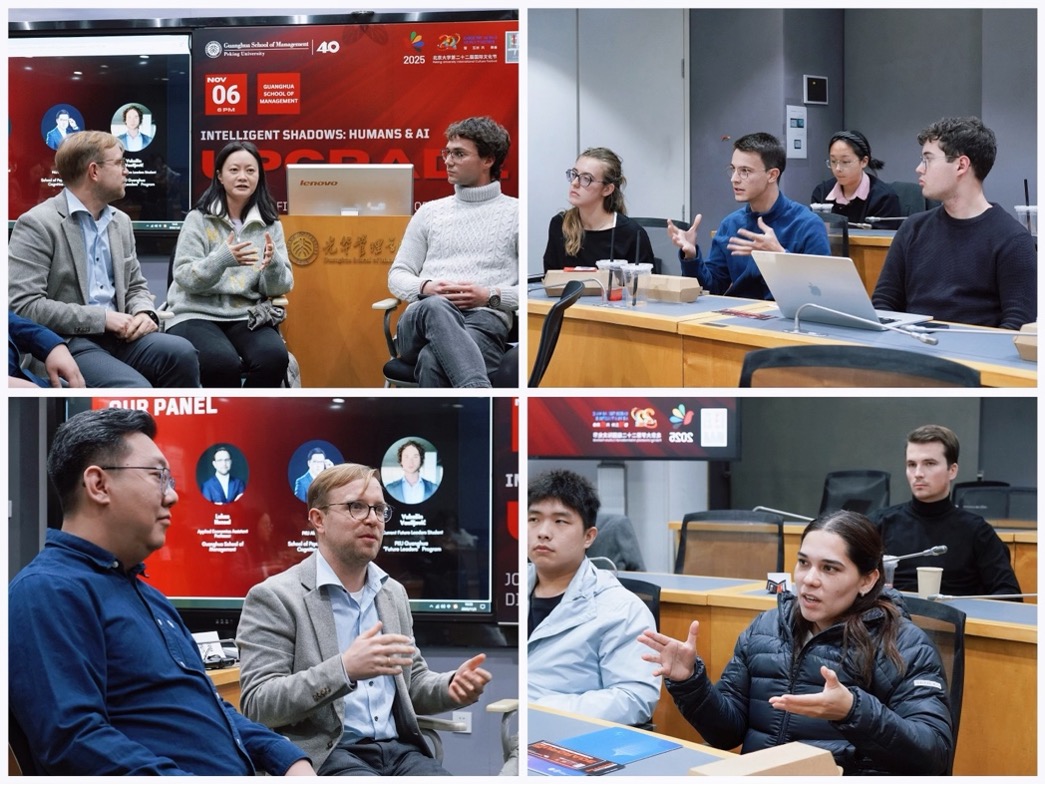
Panelists having discussion with audience
Adding a philosophical layer, Professor Juanjuan Meng connected the film’s ending, where Grey lives in an AI-induced illusion, to the Buddhist notion that feelings and emotions are not our “true self,” prompting a deep reflection on human consciousness.
The Real Trap: Habit and Digital Addiction
The panelists concluded by addressing the most immediate threat: psychological trapping. Dr. Li and Professor Hensel agreed that while we may not be physically trapped by an implant, we can absolutely be trapped by habit and virtual worlds.
Professor Meng, who did research focuses on digital addiction, underscored the severity of this psychological dependency. She stressed that while many people possess the willingness to reduce screen time, they lack effective tools. She advocated for "hard commitment devices" and noted positive developments, such as the implementation of an “algorithm shut-off” button on social media platforms in China, as a step toward regaining human control and agency.
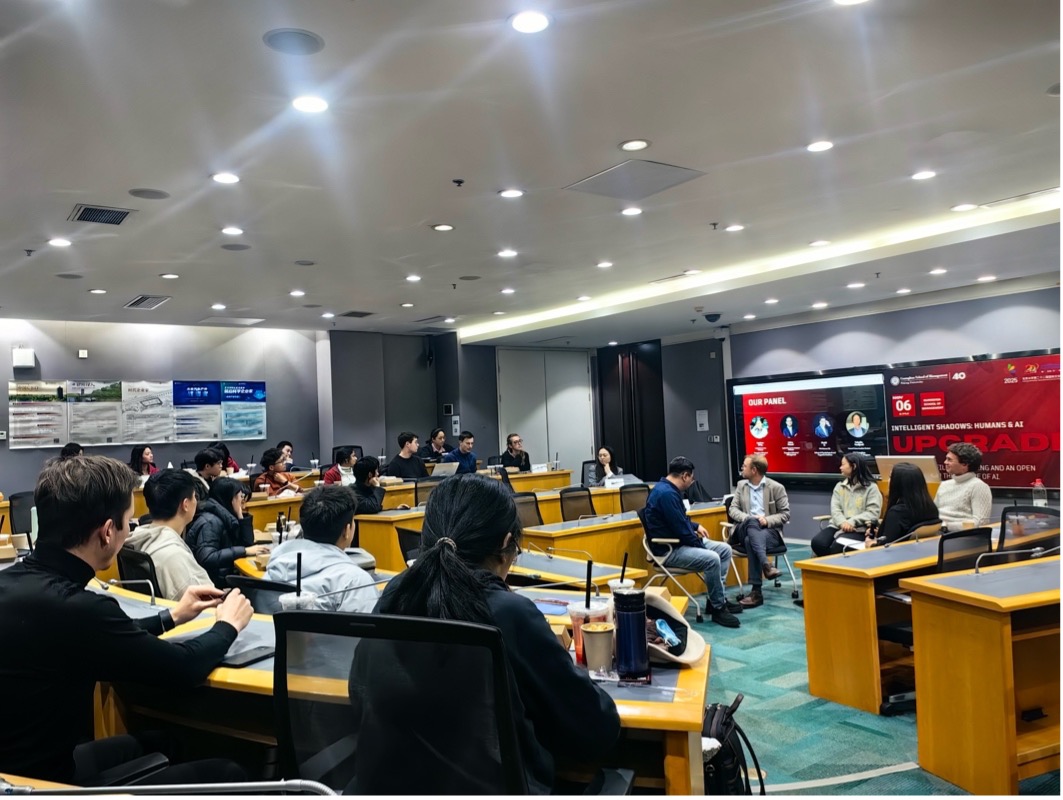
Students left the event with much to ponder. The event not only provided an excellent cultural evening but also fulfilled its promise of delivering a much-needed "thought upgrade" on one of the most pressing issues of our time: not whether AI can walk, but whether we, as humans, can still choose to walk away.


